Program Overview
The Bachelor of Fine Arts (BFA) in Film Directing and Acting is a professional undergraduate degree designed for students seeking careers in cinema, television, streaming platforms, digital media, and the wider creative industries.
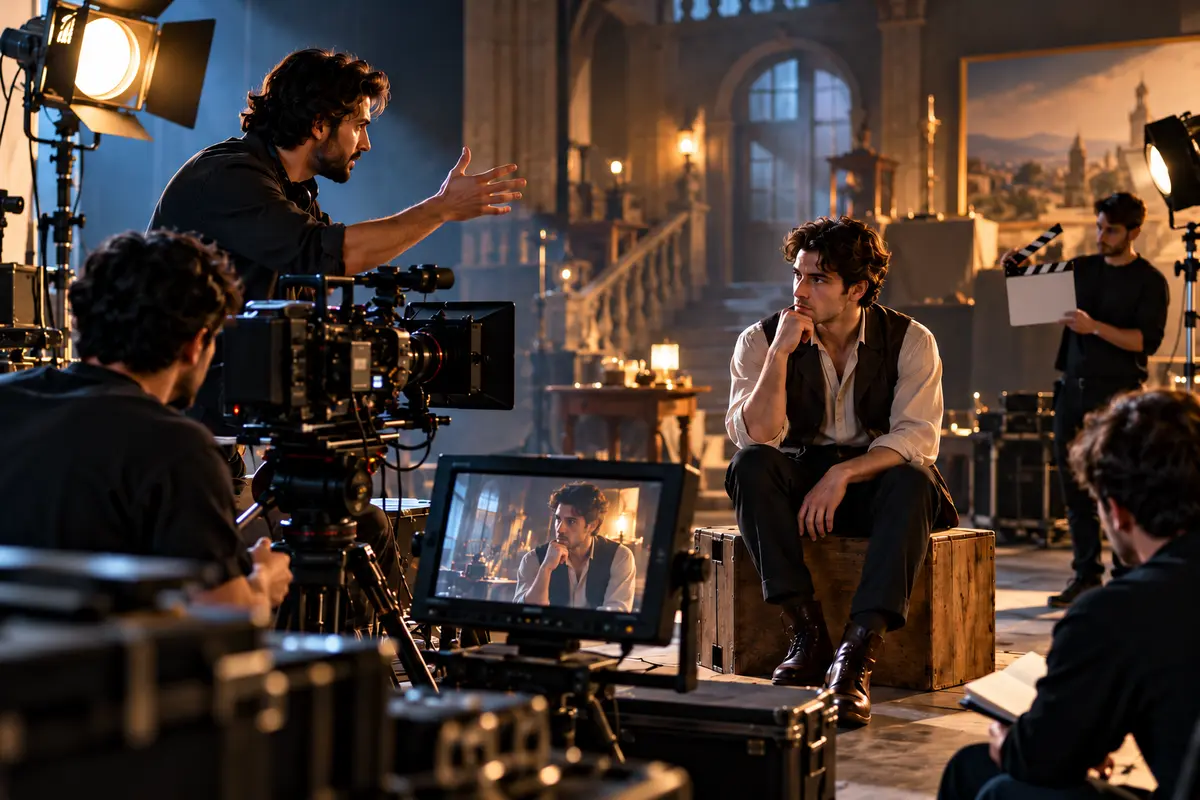
The program uniquely combines two essential dimensions of cinematic storytelling: directing the performance and performing for the camera.
Students develop practical and creative skills in film directing, acting, screenwriting, cinematography, editing, sound, production, visual storytelling, and digital media while building a strong understanding of film history, theory, professional practice, and contemporary screen technologies.
From the first year, students participate in practical productions and progressively develop their own creative portfolios. As they advance through the program, students have opportunities to specialize in areas such as Film Directing, Acting for Film and Television, Screenwriting, Cinematography, Film Production and Post-Production, or Web Development and Interactive Screen Media.
The program culminates in a professional-level graduation project designed to demonstrate each student’s creative identity, technical competence, collaborative abilities, and readiness for professional practice or postgraduate study.
Program Learning Outcomes
Upon successful completion of the BFA in Film Directing and Acting, graduates will be able to:
- Direct narrative and performance-based screen productions from concept development through post-production.
- Perform convincingly for film, television, streaming, advertising, and other camera-based media.
- Interpret screenplays and translate written narratives into compelling visual and dramatic experiences.
- Apply directing techniques to blocking, staging, shot design, rehearsal, and actor direction.
- Apply acting techniques involving character development, objectives, emotional preparation, movement, voice, improvisation, and screen performance.
- Write and critically analyze screenplays, scenes, characters, dialogue, and narrative structures.
- Demonstrate practical competence in cinematography, lighting, sound recording, editing, and post-production.
- Plan and manage film productions including scheduling, budgeting, casting, crew coordination, locations, and production documentation.
- Collaborate effectively with directors, actors, writers, cinematographers, editors, designers, producers, and other creative professionals.
- Critically analyze cinema within historical, cultural, aesthetic, ethical, and social contexts.
- Apply professional standards related to production safety, intellectual property, performer welfare, professional conduct, and ethical filmmaking.
- Use contemporary and emerging digital technologies to create and distribute screen-based content.
- Develop a professional creative portfolio, showreel, résumé, digital presence, and personal artistic identity.
- Design digital and web-based experiences supporting film, performance, audience engagement, and interactive storytelling.
- Conceive, develop, produce, and publicly present a substantial independent or collaborative capstone production.
Program Goals
The program aims to:
- Educate creative, technically competent, and professionally prepared filmmakers and performers.
- Integrate directing and acting so that directors understand performers and actors understand cinematic storytelling.
- Develop strong individual artistic identities and creative voices.
- Provide extensive practical film production and performance experience.
- Develop professional screen acting skills.
- Develop visual storytelling and directorial decision-making abilities.
- Foster collaboration across filmmaking disciplines.
- Develop entrepreneurial and digital competencies for contemporary creative industries.
- Expose students to traditional cinema as well as streaming, web, social media, and interactive platforms.
- Develop ethical, culturally aware, and responsible creative professionals.
- Prepare students to create professional portfolios, showreels, and digital profiles.
- Encourage participation in student film festivals, competitions, showcases, and professional networks.
- Prepare graduates for employment, independent creative practice, or advanced postgraduate education.
Pathways Available
Students may select specialist pathways during the advanced stages of the program according to their professional and creative interests.
Film Directing
Designed for students seeking careers as film directors, television directors, commercial directors, and visual storytellers.
Areas of study may include advanced directing, directing actors, visual language, scene construction, shot design, rehearsal methods, television and streaming direction, documentary direction, and director-led capstone production.
Acting for Film and Television
Designed for students seeking professional careers as screen performers.
Areas of study may include advanced acting technique, acting for camera, audition techniques, self-taping, character development, voice, movement, improvisation, scene study, screen presence, and professional showreel development.
Screenwriting and Story Development
Designed for students interested in becoming screenwriters, writer-directors, story developers, and creative content creators.
Students explore story structure, character development, dialogue, genre, adaptation, television writing, short-form storytelling, feature screenplay development, and script analysis.
Cinematography and Visual Storytelling
Designed for students interested in camera operation, visual image creation, and cinematic storytelling.
Areas of study include cinematography, lenses, camera movement, composition, lighting, color, visual design, and collaboration between the director and director of photography.
Film Production, Editing and Post-Production
Focuses on producing, production management, editing, sound, color correction, post-production workflows, media delivery, and the technical processes required to complete professional screen productions.
Web Development and Interactive Screen Media
This pathway combines filmmaking with contemporary digital technology and interactive media.
Students may study:
- HTML, CSS and JavaScript
- Responsive Web Design
- UX and UI Fundamentals
- Digital Portfolio Development
- Interactive Storytelling
- Web Video and Streaming Media
- Content Management Systems
- Digital Marketing for Film
- Web Accessibility
- Search and Audience Discovery
- Basic Web Application Development
Students may complete a final project combining filmmaking and web technology, such as an interactive film, digital film festival platform, actor casting portal, filmmaker portfolio platform, or web-based narrative experience.
Program Curriculum and Structure
Year 1 – Foundations of Performance and Filmmaking
Introduction to Film and Visual Storytelling – 3 Credits
Introduces cinematic language, composition, shot types, visual sequencing, framing, visual meaning, and fundamental storytelling principles.
Students learn how visual choices influence story, emotion, character, and audience interpretation.
Learning Outcomes:
- Analyze fundamental elements of cinematic language.
- Apply composition and shot selection to visual storytelling.
- Construct short visual sequences with clear narrative meaning.
Acting Fundamentals I – 3 Credits
Introduces foundational acting techniques including objectives, actions, concentration, listening, improvisation, character development, emotional awareness, and ensemble work.
Learning Outcomes:
- Demonstrate foundational acting techniques.
- Analyze character objectives and dramatic actions.
- Create believable dramatic performances.
Directing Fundamentals I – 3 Credits
Introduces the role and responsibilities of the director, script interpretation, staging, blocking, shot selection, visual planning, communication, rehearsal, and collaboration.
Learning Outcomes:
- Interpret a screenplay from a director’s perspective.
- Plan the visual execution of a dramatic scene.
- Direct simple performance-based scenes.
Screenwriting I – 3 Credits
Introduces screenplay format, dramatic structure, character, conflict, dialogue, theme, and short-film writing.
Students develop an original short screenplay through concept development, drafting, feedback, and revision.
Camera and Cinematography Fundamentals – 3 Credits
Introduces digital cinema cameras, lenses, exposure, composition, camera movement, lighting, visual continuity, and basic camera operation.
Learning Outcomes:
- Operate basic digital cinema equipment.
- Control exposure, focus, framing, and composition.
- Create intentionally composed moving images.
Voice and Movement for Performers – 3 Credits
Develops vocal expression, physical awareness, breathing, articulation, movement, posture, physical characterization, and screen presence.
Film History and Appreciation – 3 Credits
Examines significant filmmakers, cinematic movements, genres, technological developments, and major periods in international cinema.
Digital Media Fundamentals – 3 Credits
Introduces digital imaging, audio, media management, creative software, digital workflows, file formats, and foundational multimedia production.
General Education I – 3 Credits
Develops broader academic, communication, analytical, or interdisciplinary competencies supporting undergraduate education.
General Education II – 3 Credits
Provides additional general academic studies supporting professional, cultural, and intellectual development.
Year 1 Total: 30 Credits
Year 2 – Developing the Filmmaker and Actor
Acting for Camera I – 3 Credits
Students transition from general acting practice to the technical and emotional requirements of camera performance.
Areas of study include framing, marks, eyelines, continuity, coverage, emotional consistency, shot size, and interaction with production equipment.
Learning Outcomes:
- Adapt performance according to camera framing and shot size.
- Maintain emotional and physical continuity.
- Perform effectively within professional production requirements.
Directing Actors – 3 Credits
Explores communication between the director and actor, rehearsal processes, character objectives, playable direction, casting, scene analysis, performance adjustment, and the creation of a productive director-performer relationship.
Learning Outcomes:
- Communicate effectively with screen actors.
- Develop productive rehearsal strategies.
- Direct nuanced and believable screen performances.
Directing II: Scene and Sequence – 3 Credits
Develops more advanced skills in staging, coverage, visual continuity, sequence construction, rhythm, performance, camera placement, and directorial interpretation.
Screenwriting II – 3 Credits
Develops longer narratives, complex characters, subplots, advanced dialogue, rewriting, genre awareness, and professional script development.
Cinematography and Lighting – 3 Credits
Explores advanced camera operation, lighting design, color, exposure, visual mood, contrast, lenses, movement, and collaboration between the director and cinematographer.
Editing and Post-Production I – 3 Credits
Introduces editing grammar, continuity, pacing, rhythm, media organization, sound synchronization, workflow, visual transitions, and narrative construction.
Sound for Film – 3 Credits
Introduces production sound, microphones, dialogue recording, ambience, Foley, sound design, ADR, post-production sound, and basic mixing.
Production Management – 3 Credits
Covers budgeting, scheduling, casting, locations, releases, crew structures, call sheets, production documentation, logistics, safety, and set management.
Film Theory and Critical Studies – 3 Credits
Introduces major approaches to film theory, criticism, genre analysis, authorship, spectatorship, representation, and cultural interpretation.
General Education III – 3 Credits
Supports broader academic and professional development through interdisciplinary study.
Year 2 Total: 30 Credits
Year 3 – Specialization and Professional Development
Advanced Directing – 3 Credits
Students direct increasingly complex dramatic material while developing a recognizable directorial style and approach.
Study may include performance direction, visual strategy, tone, genre, complex blocking, advanced coverage, and director-led production.
Advanced Acting for Film and Television – 3 Credits
Advanced scene work focusing on emotional continuity, character transformation, screen presence, genre performance, multiple-camera environments, and professional production expectations.
Audition, Casting and Self-Tape Techniques – 3 Credits
Develops professional audition skills including script preparation, self-taping, casting calls, screen tests, callbacks, cold reading, slate preparation, and professional presentation.
Producing for Film and Digital Media – 3 Credits
Introduces creative producing, project development, financing, pitching, budgeting, scheduling, distribution, audiences, production leadership, and entrepreneurial filmmaking.
Web Development and Digital Portfolio – 3 Credits
Introduces HTML, CSS, responsive web design, digital portfolios, embedded media, user experience fundamentals, web publishing, accessibility, and professional online presentation.
Learning Outcomes:
- Design and develop a professional digital portfolio.
- Create responsive web pages.
- Integrate film, video, images, and interactive content into a web environment.
Pathway Elective I – 3 Credits
Allows students to begin advanced specialization in their selected professional pathway.
Pathway Elective II – 3 Credits
Develops further specialist knowledge and practical competencies.
Pathway Elective III – 3 Credits
Provides advanced pathway-specific creative and technical development.
Arts and Humanities Elective – 3 Credits
Broadens students’ cultural, artistic, social, and intellectual understanding.
General Education IV – 3 Credits
Completes an additional component of the student’s general academic education.
Year 3 Total: 30 Credits
Year 4 – Professional Practice and Capstone
Director’s Workshop – 3 Credits
An advanced collaborative directing laboratory focused on professional-level scene development, rehearsal, visual planning, performance, and production execution.
Actor’s Professional Studio – 3 Credits
An advanced performance workshop focused on professional screen acting, scene preparation, character development, performance refinement, and the creation of professionally presentable material.
Film Business, Law and Professional Practice – 3 Credits
Introduces copyright, intellectual property, contracts, performer releases, distribution agreements, professional ethics, production responsibilities, financing, entrepreneurship, and industry practices.
Emerging Media and Interactive Storytelling – 3 Credits
Explores streaming media, interactive narratives, virtual production, immersive media, web-based storytelling, new production technologies, and emerging screen formats.
Pathway Elective IV – 3 Credits
Provides advanced specialist study aligned with the student’s selected pathway.
Pathway Elective V – 3 Credits
Allows students to further develop their professional specialization and creative identity.
BFA Capstone Development and Pre-Production – 3 Credits
Students conceive, develop, research, pitch, cast, budget, schedule, rehearse, and prepare their final graduation project.
The course emphasizes professional pre-production planning and project readiness.
BFA Graduation Film / Acting Showcase / Creative Project – 6 Credits
Students complete a substantial professional-level creative project demonstrating the knowledge and skills developed throughout the degree.
Film Directing students may create and direct an original graduation film.
Acting students may complete a major screen performance project and professional acting showreel.
Students specializing in Web Development and Interactive Screen Media may integrate film production with an interactive or web-based experience.
Other pathway students may complete equivalent discipline-specific capstone productions subject to program approval.
Professional Portfolio and Industry Showcase – 3 Credits
Students prepare professional materials for entry into the creative industries.
These may include:
- Professional résumé or CV
- Director or actor showreel
- Digital portfolio
- Personal website
- Artist statement
- Professional biography
- Selected creative work
- Industry presentation materials
Students may publicly present selected work through a showcase, screening, exhibition, or portfolio presentation.
Year 4 Total: 30 Credits
Total Degree Requirement
120 U.S. Semester Credit Hours
Capstone Learning Outcomes
Upon completion of the BFA capstone, students will be able to:
- Conceive and develop an original creative project.
- Undertake appropriate creative, technical, and contextual research.
- Manage pre-production, production, and post-production processes.
- Collaborate within a professional production environment.
- Demonstrate advanced directing, acting, or pathway-specific competencies.
- Solve creative, technical, logistical, and production challenges.
- Complete professional-level post-production or project delivery.
- Critically evaluate their own artistic and professional decisions.
- Present their work professionally to an audience or industry panel.
- Develop portfolio material suitable for employment, festivals, further study, or independent creative practice.
Assessment Methods
Assessment emphasizes creative practice, professional development, applied skills, and demonstrated competence rather than relying primarily on traditional examinations.
Assessment methods may include:
- Short films
- Directed scenes
- Acting performances
- Camera performance exercises
- Auditions and self-tapes
- Screenplays
- Production portfolios
- Cinematography assignments
- Editing projects
- Sound projects
- Web and interactive projects
- Creative pitches
- Storyboards and shot lists
- Production books
- Reflective journals
- Film analysis
- Presentations
- Collaborative productions
- Professional showreels
- Digital portfolios
- Festival-ready films
- Capstone and graduation productions
Assessment criteria may evaluate creativity, storytelling, technical execution, performance quality, directing choices, collaboration, professionalism, research, critical reflection, problem-solving, and the student’s ability to realize an original artistic vision.
Entry Requirements
Applicants should normally possess:
- A U.S. high school diploma or recognized international equivalent; or
- An equivalent secondary-school qualification providing access to undergraduate higher education.
Applicants may also be requested to provide:
- A completed application.
- Secondary-school transcripts.
- A personal statement.
- Identification documentation.
- Evidence of English-language proficiency where required by University policy.
Creative Admission
Because this is a professional creative degree, applicants may also be invited to submit a creative portfolio, complete an audition, or participate in an admissions interview.
Acting Applicants
Applicants interested in acting may submit:
- A recorded monologue.
- A dramatic scene.
- A self-tape.
- A live or online audition.
Directing Applicants
Applicants interested in directing may submit:
- A short film.
- A screenplay.
- A storyboard.
- A photography portfolio.
- A visual storytelling project.
- A creative statement.
Previous professional experience in filmmaking or acting is not required.
The program seeks students who demonstrate creative potential, motivation, curiosity, commitment, and readiness to develop through professional training.
Career Opportunities
Graduates of the program may pursue careers across film, television, streaming media, advertising, digital entertainment, and related creative industries.
Film Director
Directing short films, feature films, television productions, commercials, music videos, branded content, and digital productions.
Film and Television Actor
Performing in film, television, streaming productions, commercials, digital media, and related screen-based productions.
Assistant Director
Supporting professional directing teams and managing production operations on film and television sets.
Screenwriter
Developing scripts for cinema, television, streaming platforms, digital productions, and independent media.
Writer-Director
Developing original screen projects while combining screenplay development and directing.
Cinematographer / Director of Photography
Creating the visual style, lighting, camera language, and photographic execution of screen productions.
Film Editor
Structuring narrative, performance, pacing, rhythm, sound, and visual continuity during post-production.
Film Producer / Creative Producer
Developing, financing, organizing, managing, and delivering film and digital media productions.
Casting Assistant / Casting Professional
Supporting casting processes for film, television, commercials, digital productions, and streaming projects.
Content Director / Digital Content Creator
Developing and producing audiovisual content for social media, streaming platforms, online entertainment, businesses, and digital audiences.
Web and Interactive Media Designer
Creating websites, digital portfolios, interactive narratives, entertainment platforms, promotional experiences, and web-based media projects.
Acting Coach / Performance Director
Graduates who develop appropriate professional experience and additional training may pursue work in acting coaching and performance direction.
Other potential career areas include production management, documentary filmmaking, advertising production, entertainment marketing, social media production, film festival programming, digital storytelling, creative entrepreneurship, independent filmmaking, and interactive media production.
Film Festivals and International Recognition Opportunities
AACTD encourages students to develop original work suitable for submission to legitimate national and international student-film festivals, competitions, exhibitions, and professional showcases.
Eligibility for external competitions and festivals is determined independently by each organization and may change from year to year.
Student Academy Awards
Outstanding eligible student productions may be considered for submission to the Student Academy Awards, subject to the current eligibility rules and submission requirements established by the Academy of Motion Picture Arts and Sciences.
Eligible categories may include narrative, documentary, animation, experimental, or other categories available during the relevant submission year.
BAFTA Student Awards
Eligible student projects may be considered for BAFTA student initiatives and awards designed to recognize emerging creative talent from universities and film schools around the world.
Participation remains subject to BAFTA’s current institutional, project, and submission requirements.
Directors Guild of America Student Recognition
Eligible directing students may pursue appropriate Directors Guild of America student recognition opportunities where applicable.
All submissions remain subject to current DGA rules relating to institutional location, student status, production requirements, category eligibility, and other conditions.
Independent and International Film Festivals
AACTD may support selected student productions in developing festival submission strategies for suitable regional, national, and international festivals.
Support may include:
- Film festival research.
- Submission planning.
- Film packaging.
- Posters and promotional materials.
- Trailers and screeners.
- Director statements.
- Press kits.
- Festival-ready technical delivery.
Participation, nomination, official selection, awards, or winning is never guaranteed and remains subject to the independent decisions and eligibility rules of each external organization.
AACTD Film and Performing Arts Awards
AACTD may recognize outstanding student achievement through annual institutional awards celebrating creativity, professional development, collaboration, and artistic excellence.
AACTD Best Student Film Award
Recognizes outstanding overall achievement in an original student film production.
AACTD Excellence in Film Directing Award
Recognizes exceptional directorial vision, leadership, storytelling, and execution.
AACTD Best Screen Performance Award
Recognizes outstanding acting achievement in a student screen production.
AACTD Emerging Actor Award
Recognizes exceptional potential, development, professionalism, and screen presence.
AACTD Screenwriting Excellence Award
Recognizes outstanding achievement in original screenplay writing and story development.
AACTD Cinematography Award
Recognizes excellence in cinematography, composition, lighting, camera work, and visual storytelling.
AACTD Digital Storytelling and Web Innovation Award
Recognizes exceptional integration of filmmaking, interactive media, digital technology, and web-based storytelling.
AACTD President’s Award for Creative Excellence
An institutional distinction recognizing exceptional artistic achievement, professionalism, leadership, creative vision, and contribution to the academic and creative community.
AACTD institutional awards represent internal recognition by the University and do not imply endorsement, accreditation, certification, or recognition by an external professional organization.
Professional and Academic Development
AACTD aims to create an environment in which students progress beyond classroom learning to become confident and capable creative professionals.
Throughout the program, students progressively build portfolios of films, performances, scripts, visual work, production projects, web content, and digital media.
By graduation, students are expected to possess a professional body of work demonstrating creative development, technical competence, collaborative experience, critical understanding, and an individual artistic identity.
Students are encouraged to participate in screenings, workshops, masterclasses, productions, professional networking activities, film festivals, collaborative projects, and public showcases whenever appropriate opportunities are available.
Program Philosophy
Learn the craft. Develop your voice. Create the story. Perform it. Direct it. Bring it to the screen.